Pipe joints capable of withstanding only hoop loading due to internal pressure. In this type, the axial forces in the system have to be taken by external provisions on the pipeline.
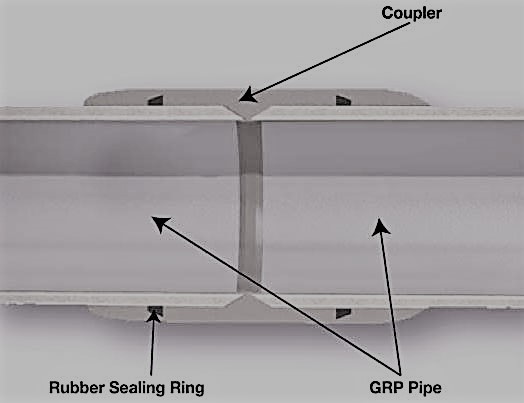
Double bell Coupler with elastomeric Rubber Sealing Rings
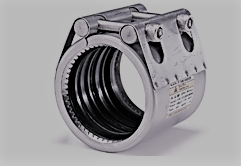
Mechanical Steel Couplings
B) Restrained Joints
Pipe joints capable of withstanding internal pressure and axial load due to internal pressure.
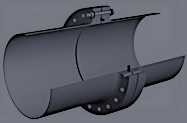
GRP Flanged Joint
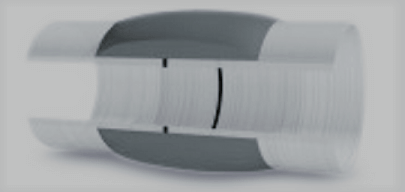
Butt & Wrap Joints
Adhesive Bonded Glued coupling
Double bell Coupler with elastomeric Rubber Sealing Rings
Simple and quick joining method used for inderground installation. The GRP coupling is supplied with two elastomer gaskets which ensures joint tightness. The special design makes is possible for small angular deviations within the pipeline and also makes the pipeline resist forces of ground movement during earthquake
Mechanical Steel Couplings
Even though not the most common method, non-compositeflexible steel couplings are generally used to connect GRP pipes made of diiferent materials, or repair of possible leaks in the pipeline.
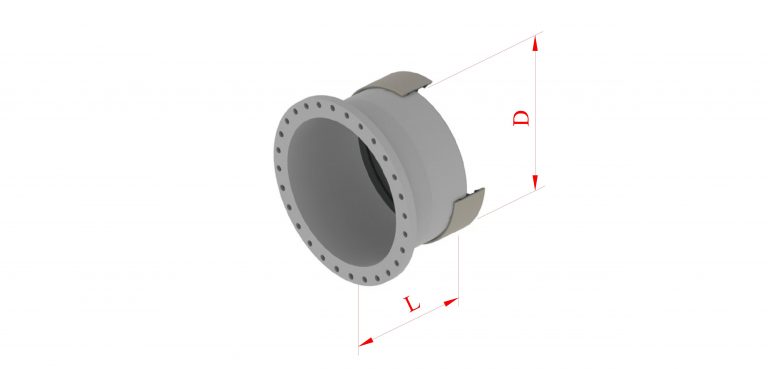
GRP Flange Joint
AvisaParseh flanges are made of resin and fiberglass material and are generally used to connect the GRP pipes together or to process and auxiliary equipments. Raised face, flat face and loose ring flanges are are produced according to the bolting dimensions specified by the projects (ANSI, DIN,…)
Burt and Wrap Laminated Joint
Classifies as restrained joint generally used for aboveground installation, a carefully calculated thickness and length of fiberglass material embeded in resin is applied at pipe ends forming a rigid high strength joint. Laminated Joints are typically used where the transmission of axial forces from internal pressure is required
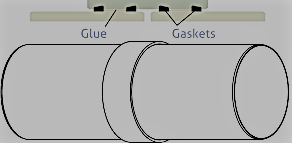
Adhesive Bonded Glued Coupling
A similar pipe joining method to Double bell coupler system, pipe ends are inserted into a double-oring coupling and special epoxy adhesive is then injected into the pipe-coupling section, forming a rigid connection. This type of restrained joints are most suitable for aboveground pipeline installation.
Available Over a Wide Range of Diameters, Pressures and Configurations
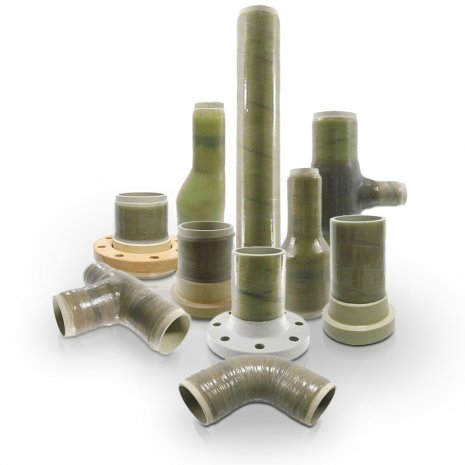
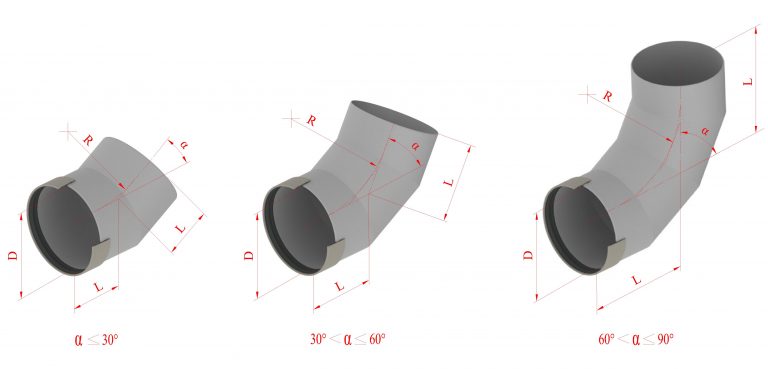
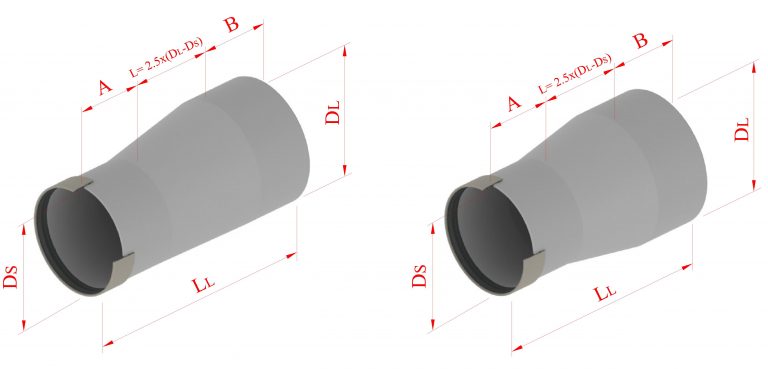
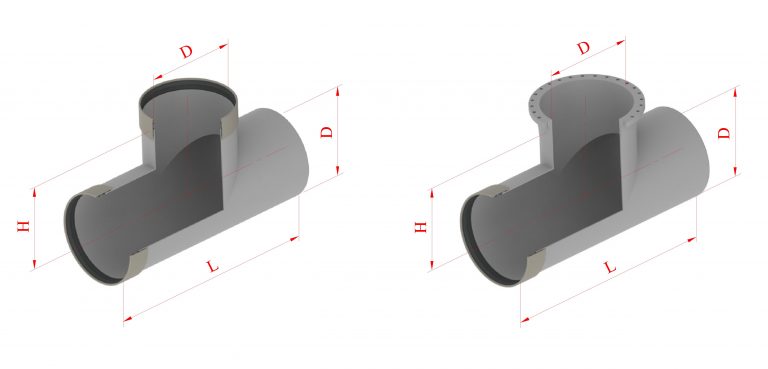
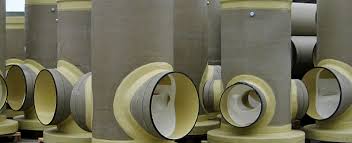
The cut and mitter process is an extremely versatile process for making a full range of fittings of different shapes and diameters for all pressure classes and types installation. Fabrication of GRP fittings starts by producing pipe on continuous filament winding machine.the pipe is then cut to desired dimensions by precision angle cutting equipment and joined together by various grades of fiberglass material (woven wroving and chopped strand mat) embeded in unsaturated polyester resin resulting in a high strength, corrosion resistance fittings.